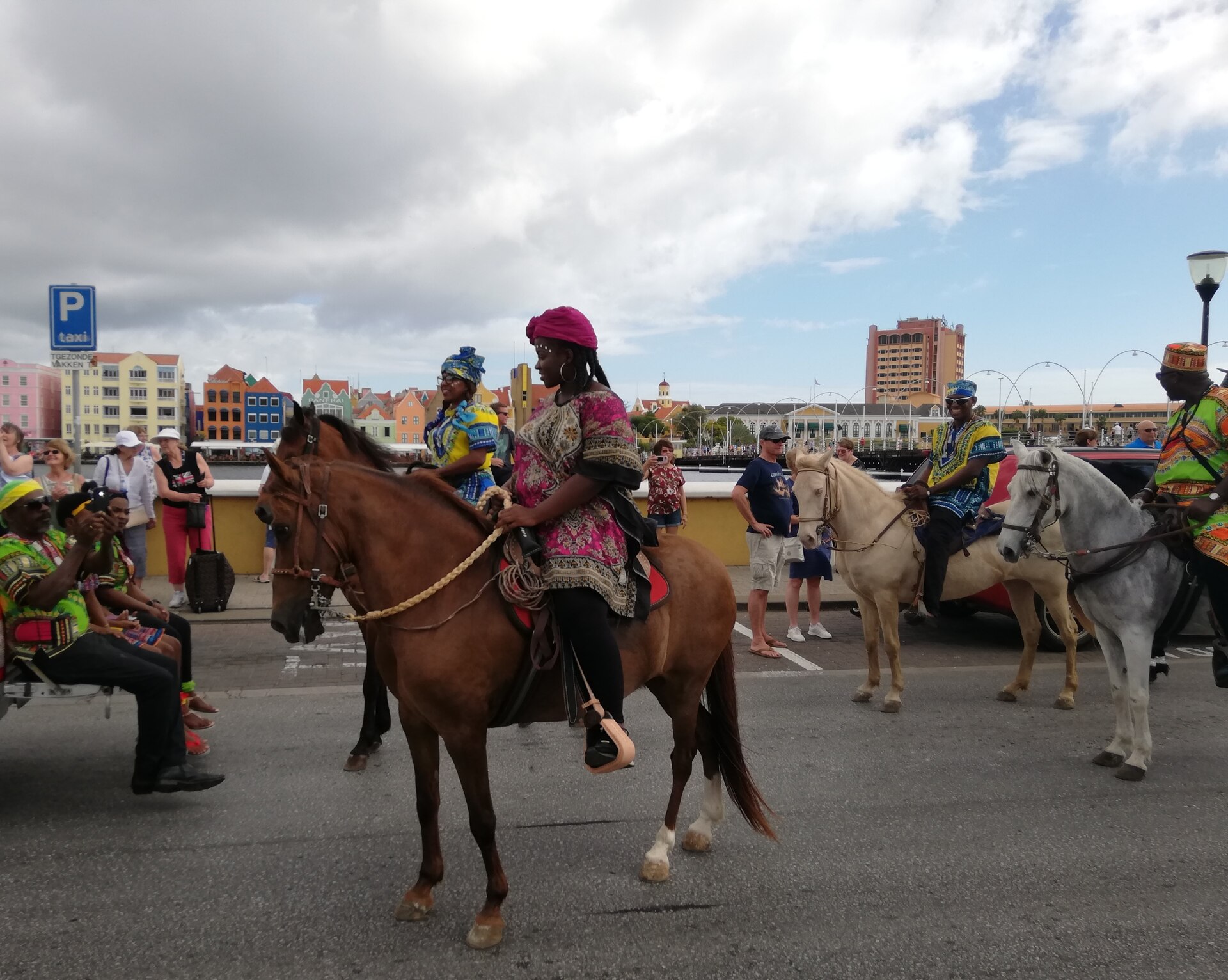
On a small island in the Grenadines, a family wants to honour its elders. Maybe a new boat is ready for the sea, a couple is about to marry, or a headstone is going up for a loved one. So the drummers come, rum and water are poured on the ground, and a lead singer calls out a song that is older than anyone in the yard. This is the Big Drum dance of Carriacou, and it is our letter B in the Harpy Express Caribbean A–Z.
Carriacou is one of the three islands that make up the nation of Grenada, alongside Grenada itself and Petite Martinique. Its name is said to come from an Amerindian word meaning “island of many reefs”. Carriacouans, known as Kayaks, have kept one of the Caribbean’s most remarkable living links to West and Central Africa: a dance where every rhythm remembers a people, and every gathering makes room for the ancestors.
We opened the series with A is for Anansi, the spider trickster whose stories crossed the Atlantic. Big Drum is another of those journeys, told in drumbeats instead of words.
What is the Big Drum dance of Carriacou?
Big Drum is a ritual of music, song and dance. It is also known as the Nation dance. At its heart is the idea of lineage. Many families in Carriacou trace their roots to particular African “nations”, and the oldest Big Drum songs are dedicated to them. When a nation’s song is played, it honours those ancestors and keeps their memory present in the community.
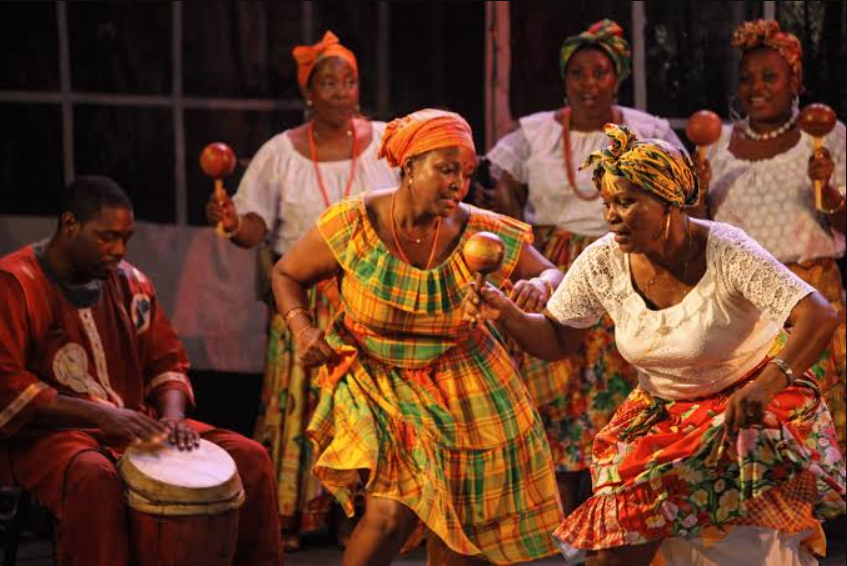
There is no priest. Instead, the ceremony is led by a chantwell (from the French Creole chantuelle), the lead singer who starts each song. A chorus answers, the drummers lock in, and dancers step into the ring one or two at a time. According to Carriacou-born historian Winston Fleary, the tradition holds 129 songs and 26 types of dance.
The nine nations in the rhythm
Big Drum is best known for its nation dances. Scholar Lorna McDaniel describes nine African nations that lived on early Carriacou, each remembered through its own coded rhythm on the drums. Fleary lists them as:
- Cromanti
- Igbo (Ibo)
- Manding
- Arada
- Chamba
- Kongo
- Temne
- Moko
- Banda
Lists differ a little from source to source. The 1956 notes by researcher Andrew Pearse, for example, speak of dances from ten nations. Fleary also points out that “Cromanti” is not really a nation’s name. It comes from Kormantin, a fort on the coast of present-day Ghana. That is a reminder of how much history is packed into a single word in this tradition.
Cromanti still holds a special place. It is traditionally the opening song, and Pearse’s notes also describe a “Beg Pardon” song, often around midnight, when a family kneels and asks the ancestors for forgiveness and blessing.
The drums, the chantwell and the ring
The “big drums” are three in number. Two boula drums keep a steady beat, while a lead drum called the cutter plays the accents and talks back to the dancers. Shakers and maracas, which Pearse called “chac-chacs”, fill out the sound.
The music takes place inside a ring. Only the chantwell, drummers and dancers step inside it, and part of the ring is traditionally left open so the ancestors can join in. Before the first song, the ground is “wetted” with libations of rum and water.
The dancers are usually women, though men sometimes dance too. They often dance barefoot in white dresses and headscarves with wide skirts, holding the hem out at the tips of their fingers so the fabric swings with each turn. Men who dance tend to wear white shirts and dark trousers.
Three layers of song
Over two centuries, Big Drum grew in layers, and you can still hear them in a single night.
- Nation songs are the oldest, dedicated to the African nations above.
- Creole songs came later, with dances such as Bele, Hallecord, Old Kalenda and Juba.
- “Frivolous” songs are the lighter, social dances, some borrowed from neighbours such as Grenada, Trinidad, Union Island and Antigua. Pearse’s list includes the Chattam, Lora, Cariso and Trinidad Kalenda.
When Big Drum is played
Big Drum belongs to life’s big moments in Carriacou. Fleary and Pearse both describe it at:
- Weddings, often on the eve of the marriage
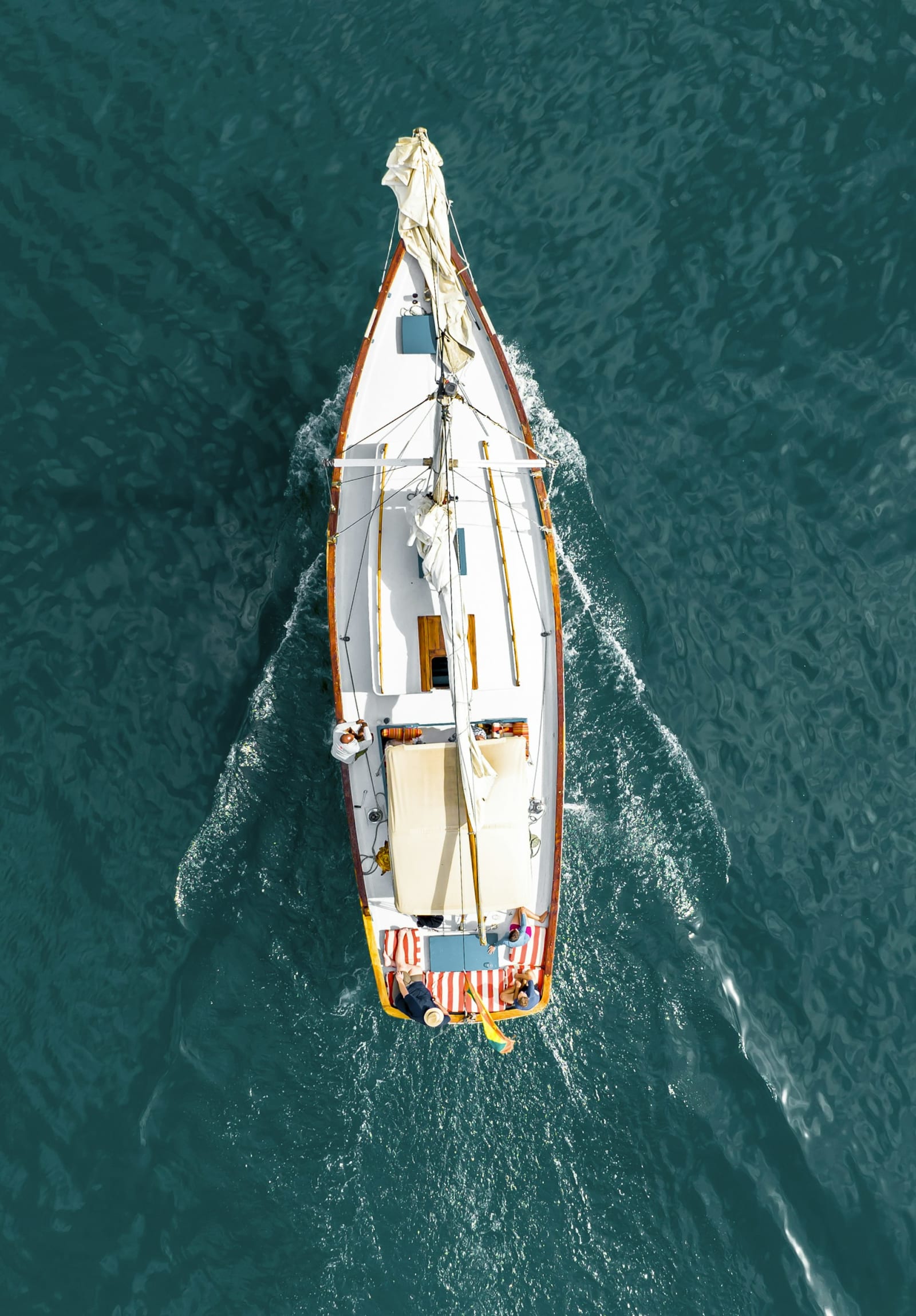
- Boat launchings, when a new schooner or sloop goes into the water
- Stone feasts, when a headstone is raised for a loved one, usually two to three years after the burial
- House blessings and wakes
- Maroons, community feasts held in spring to give thanks and pray for rain
Families also hold a Big Drum when they feel they need the ancestors’ help, for example in a time of illness or bad luck. Through all of it the purpose is the same: remembering where you come from and honouring those who came before.
How Big Drum survived
The tradition came through hard times. Fleary writes that drumming was banned in the late 1700s, and that Big Drum was not openly allowed again until the 1830s. Carriacouans held on to the songs anyway, passing them from family to family.
Outsiders took notice in the 20th century. In 1956, Folkways Records released The Big Drum Dance of Carriacou, with introduction and notes by Andrew C. Pearse. In 1962 the American folklorist Alan Lomax made field recordings on the island. Decades later, the Association for Cultural Equity, which looks after Lomax’s archive, worked to bring those 1962 recordings home to Carriacou. Ethnomusicologist Lorna McDaniel’s book The Big Drum Ritual of Carriacou: Praisesongs in Rememory of Flight (University Press of Florida) collects 120 song texts, and a new paperback edition was released in 2026.
On the island, the late Winston Fleary was one of the tradition’s great champions. Born in Belvedere, Carriacou, in 1943, he founded the Big Drum Nation cultural group in New York, took the dance to stages including the Smithsonian and the Edinburgh Festival, and moved home in 1988. Grenada’s Ministry of Culture named him a Cultural Ambassador for Carriacou. The documentary Big Drum by filmmaker John Melville Bishop, produced by the Association for Cultural Equity, features Fleary with elders, drum makers, dancers and boat builders, and includes a boat launching filmed in July 2012.
The diaspora keeps the beat too. In Huddersfield, England, the Shaping Care Big Drum Dancers, including relatives of Fleary, carry the tradition on far from the Grenadines.
Where to see Big Drum: the Carriacou Maroon and String Band Music Festival
Most Big Drum ceremonies are family and community events. The best-known public chance to see it is the Carriacou Maroon and String Band Music Festival, held at the end of April each year. Fleary was one of its founders.
The festival joins Big Drum rhythms with string band music, quadrille and folk dance, and maroon food: rolled rice, ground provisions and meat cooked in big pots over an open fire. For the 2026 edition, NOW Grenada reported that organisers announced 24 to 26 April under the theme “Honouring the Ancestors, Empowering the Youth”. The plan was a village maroon in Belair, “Strings in the City” in Hillsborough, a cultural showcase at the Carriacou Botanical Gardens and a closing day at Paradise Beach. Organisers named the Grenada Tourism Authority and the Ministry of Carriacou and Petite Martinique Affairs as supporters.
As of November 2026, dates for the 2027 festival have not been announced. Watch the Grenada Tourism Authority’s Pure Grenada site and the festival committee’s own page, and check our Caribbean Events Calendar, which we update as dates are confirmed. If you are planning a trip for another island’s big celebration, our guide to Barbados Independence Day 2026 shows how folk culture takes centre stage there too.
If you do visit Carriacou outside festival time, remember that most Big Drum events are private family occasions. If you are invited, follow your hosts’ lead, stay outside the ring unless asked in, and ask before taking photos.
Quick facts
- What: Big Drum, also called the Nation dance, a ritual of drumming, song and dance honouring ancestors
- Where: Carriacou, Grenada, with groups in the diaspora
- Drums: three, two boula and one cutter, plus shakers
- Leader: the chantwell, or lead singer
- Nations honoured: nine, including Cromanti, Igbo, Manding and Kongo
- Size of the repertoire: 129 songs and 26 dance types, according to Winston Fleary
- Best public chance to see it: the Carriacou Maroon and String Band Music Festival, held at the end of April
FAQ
Is Big Drum a religion?
Not in the usual sense. There is no priest, and it is not tied to a church. It is a family and community ritual for honouring ancestors, marking life events and giving thanks, led by a chantwell.
Why is it called the Nation dance?
The oldest songs are each dedicated to an African “nation”, such as Cromanti, Igbo or Kongo, that Carriacou families trace their roots to. Playing a nation’s song honours those ancestors.
Can visitors see the Big Drum dance in Carriacou?
Yes. The most reliable time is the Carriacou Maroon and String Band Music Festival at the end of April. At other times Big Drum is mainly played at weddings, boat launchings and stone feasts, which are private family events.
Sources
- Winston Fleary, “The Big Drum Nation Dance of Carriacou”, Musical Traditions (MT256)
- Andrew C. Pearse, liner notes, The Big Drum Dance of Carriacou, Folkways Records (1956)
- Lorna McDaniel, The Big Drum Ritual of Carriacou (University Press of Florida)
- Association for Cultural Equity: Winston Fleary
- Association for Cultural Equity: Big Drum documentary
- NOW Grenada: Carriacou launches Maroon and String Band Music Festival (17 March 2026)
- Pure Grenada (Grenada Tourism Authority): Carriacou Maroon and Stringband Music Festival
- Our Carriacou: Maroon and String Band Music Festival
- Huddersfield Contemporary Music Festival: The Carriacou Huddersfield Connection
- Wanderlust: Discover a little corner of Africa in the Caribbean
- Wikipedia: Big Drum
— Harpy Express Culture & Festivals Desk