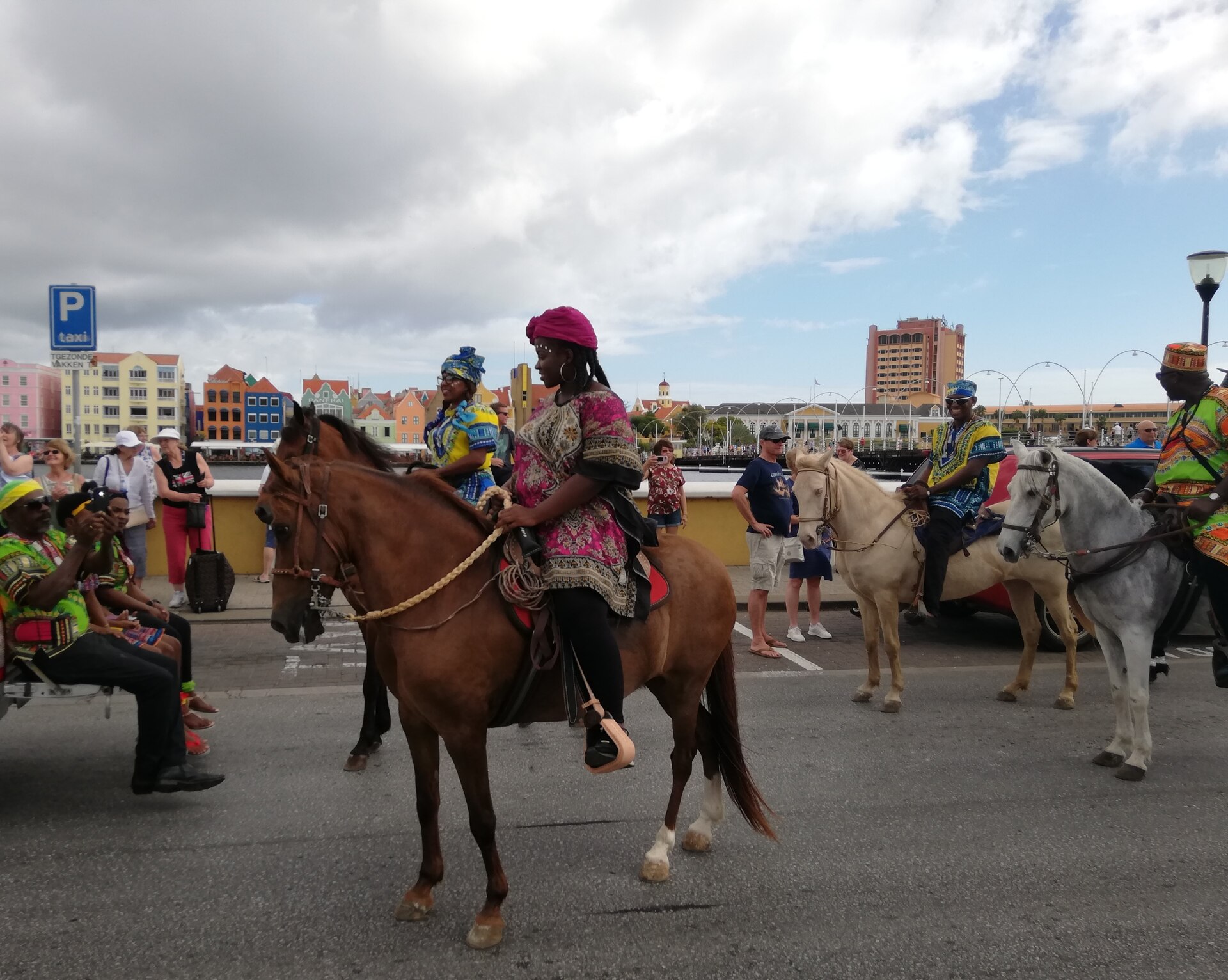
Every year, Curaçao gives itself over to carnival. For weeks the island moves to tumba, its own carnival rhythm, with jump-ups, queen elections, children’s parades and a horseback parade, all building to one big Sunday. In 2027 that Sunday comes early: the Gran Marcha, the grand carnival parade, fills the streets of Willemstad on Sunday 7 February, from 11 am to 7 pm, according to the Curaçao Tourist Board. Two days later the season says goodbye with the Marcha di Despedida, the night-time farewell parade. Here is what to expect and how to enjoy it.
See every Caribbean carnival on our Events Calendar →
Key facts
| Gran Marcha | Sunday 7 February 2027, 11 am to 7 pm, Willemstad (Curaçao Tourist Board) |
|---|---|
| Farewell parade | Marcha di Despedida on Tuesday 9 February 2027, the eve of Ash Wednesday; start time to be confirmed |
| Carnival Monday | Monday 8 February 2027 is expected to be the carnival holiday, the Monday after the Gran Marcha; to be confirmed by the Government of Curaçao |
| Where | Willemstad, mainly on the west side of the harbour around Otrobanda, plus a parade in Bandabou (Barber) in the west of the island |
| Organiser | Beehives Curaçao, selected by the Ministry of Education, Science, Culture and Sport to organise the 2026 and 2027 carnivals |
| Entry | Watching along the route is free. Grandstand and party-stand seats and group costume packages are sold separately; check the official site |
| Official pages | Curaçao Tourist Board: Gran Marcha 2027 · Curaçao Tourist Board: Curaçao Carnival |
What happens
The Curaçao Tourist Board has confirmed the Gran Marcha date and times. The full 2027 programme has not been officially published yet, so the other dates below follow the usual pattern and early listings and are to be confirmed by the organisers.
- Opening of the season and jump-ups (January). After the official opening, carnival groups take to the streets in matching T-shirts for jump-ups (outdoors) and jump-ins (indoors), raising money for their floats and costumes.
- Tumba Festival (usually January, at the Curaçao Festival Center in Brievengat). Over four nights, singers and composers compete for the title of Rei or Reina di Tumba, and the winning song becomes the season’s road march, the tune you will hear on every truck. There is a youth Tumba festival too.
- Elections of the Carnival Queen, Prince and Pancho, the royals and jokers who lead the season.
- Karnaval di Kabai, the horse parade, traditionally the first parade of the season, with costumed riders through Willemstad. Early listings put it on Sunday 24 January 2027 (to be confirmed).
- Children’s parade, usually the Sunday before the Gran Marcha (expected 31 January), and the Teen Parade, an evening parade on the Friday before (expected 5 February), where secondary schools design their own costumes and dances.
- Bandabou parade in Barber, in the island’s rural west, on the Saturday (expected 6 February).
- The Gran Marcha, Sunday 7 February. The crown of the season: carnival groups with themed floats, feathered and beaded costumes, brass bands and music trucks dance for hours along the route, while families line the road from early morning.
- Farewell parades. Children and teens say goodbye on Monday, and on Tuesday night the Marcha di Despedida lights up the city with illuminated costumes and floats. The season traditionally ends with the burning of Rei Momo at midnight; in 2026 the close was marked instead with fireworks and a laser show.
History and what makes it special
Carnival has a long history on the island. An 1872 ordinance in Curaçao’s Official Gazette is the first known mention, regulating carnival parades in public places. The first street carnival is usually dated to 1947, with oral history crediting a club called the Jolly Fellows Society, but for years it stayed small and fairly exclusive, and interest faded in the 1950s.
That changed as Curaçaoans claimed carnival for everyone. A central carnival committee was set up in 1961 to open the celebration to all, and from 1969 carnival grew into the island-wide festival it is today. In 1971 local musicians pushed for carnival to have its own sound, and the first Festival di Tumba was held at the Roxy Theatre in Pietermaai. Anselmus “Boy” Dap, the “Father of Tumba”, won that first year and went on to win ten times, and Elia Isenia became the first woman crowned Queen of Tumba.
Tumba is what makes Curaçao’s carnival its own. Its African-rooted rhythm, sung in Papiamentu, sets the pace for every parade, and the search for each year’s winning song keeps the whole island talking. Add the horse parade, the rural Bandabou parade and a farewell under the lights, and you get a carnival that feels both grand and deeply local.
Watch: past editions
Tips for going
- Get there early. The Gran Marcha runs most of the day, and the best spots along the route fill from the morning. Bring water, sunscreen, a hat and a folding chair.
- Leave the car behind. Main roads through Willemstad close to traffic on parade days, so plan to walk or take a taxi to a drop-off point a few streets away.
- Consider a stand seat. Grandstands and party stands along the route offer shade, drinks and toilets for a day ticket. Book through official or well-known operators.
- Learn the tumba. Listen to the year’s winning tumba before you go; once it plays on every truck, you will want to sing along.
- Join a group. Some carnival groups welcome visitors. Contact them early and ask what the costume package includes.
- Double up on carnival. Aruba’s Grand Parade in Oranjestad is the same Sunday, after San Nicolas on Saturday, and Trinidad’s Carnival Monday and Tuesday follow on 8 and 9 February. See our Aruba Carnival 2027 guide and Trinidad Carnival 2027 guide.
Where to stay and getting around
Staying in Willemstad keeps you close to the action: Otrobanda puts you near the parade, while Punda and Pietermaai are a walk across the harbour bridges with plenty of restaurants and nightlife. Our Willemstad guide explains the neighbourhoods, and you can browse our Curaçao directory and Curaçao hotels to plan your stay. Beach resorts along the south coast are a short taxi ride from the city. Flights arrive at Curaçao International Airport (CUR), about 20 minutes from Willemstad. On parade days, expect closed roads and diversions, and allow extra time to get anywhere.
FAQ
When is Curaçao Carnival 2027? The season runs through January into early February and peaks with the Gran Marcha on Sunday 7 February 2027, then closes with the Marcha di Despedida on Tuesday 9 February, the eve of Ash Wednesday.
What time does the Gran Marcha start? The Curaçao Tourist Board lists the Gran Marcha 2027 from 11 am to 7 pm on Sunday 7 February. Times can change, so check official announcements in the final week.
Where does the Gran Marcha go? Through Willemstad, mainly on the Otrobanda side of the harbour. The official 2027 route is to be confirmed.
Is it free to watch? Yes, watching from the roadside is free. Grandstand seats and costume packages cost extra.
What is tumba? Curaçao’s own carnival music, chosen each year at the Festival di Tumba, which began in 1971. The winner is crowned Rei or Reina di Tumba and their song becomes the season’s road march.
Planning more Caribbean celebrations? See what’s coming up on our Caribbean Events Calendar.
Sources: Curaçao Tourist Board: Gran Marcha 2027; Curaçao Chronicle: Beehives to organise carnival 2026 and 2027; Curaçao Chronicle: the 2026 farewell; Curaçao Chronicle: Enjoy carnival in Curaçao; Curaçao History: first mention of carnival, 1872; Curaçao History: the first carnival parade; NOS: 50 years of carnival in Curaçao; Kòrsou ta Dushi: Festival di Tumba, its origins; NaarCuraçao: carnival 2027 parade listings. Featured photo: Kattiel, CC BY-SA 4.0, via Wikimedia Commons.
— Harpy Express Events Desk