Last checked: November 2026
Guyana’s best-known animals are the jaguar, giant otter, giant anteater, harpy eagle, black caiman, arapaima and the hoatzin, the national bird. The Rupununi savannah and rivers give the best open-country sightings, Iwokrama is the place for rainforest animals, and Georgetown has manatees and hoatzin within an hour. Many animals are easiest to find at night, with a guide and a spotlight.
At a glance
- Where: the Rupununi, Iwokrama Forest, the Kanuku Mountains, the coast near Georgetown
- Getting there: small plane or long road trip inland; taxi or day tour on the coast
- Time needed: a day for coastal wildlife; a week inland for the big animals
- Cost: varies; ask for a current quote
- Best for: wildlife watchers happy to work for sightings, with few other visitors around
Which animals is Guyana known for?
Here are the headline species and where you have the best odds of seeing each.
| Animal | What it is | Best place to look |
|---|---|---|
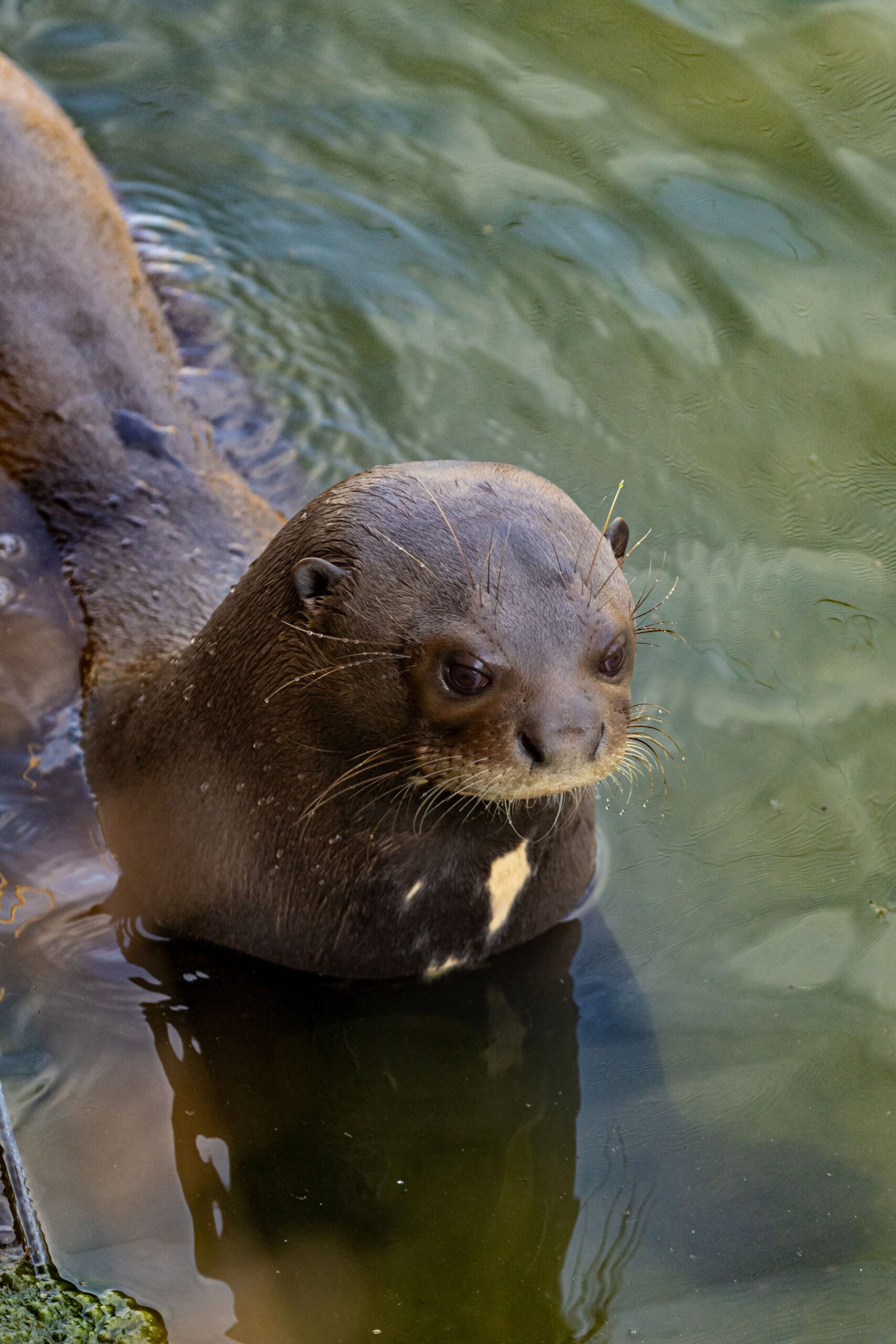
| Giant otter | The world’s longest otter, living in noisy family groups | Karanambu and Rewa, North Rupununi |
| Giant anteater | A long-snouted, shaggy anteater of open grassland | Rupununi savannah, early morning |
| Jaguar | The largest cat in the Americas | The road through Iwokrama, at dawn, dusk or night |
| Harpy eagle | The most powerful eagle in the Americas | Iwokrama, Rewa and the Rupununi forests |
| Black caiman | The largest member of the alligator family | Rupununi River at night, Caiman House |
| Arapaima | A huge, air-breathing river fish | Ponds and oxbow lakes near Rewa |
| West Indian manatee | A slow, plant-eating sea cow | Ponds in Georgetown’s Botanical Gardens and National Park |
| Hoatzin | Guyana’s national bird, known locally as the Canje pheasant | Mahaica River and other coastal creeks |
Where can you see a jaguar in Guyana?
Jaguars live across most of the forested interior, but they are hard to see. The best odds come from the Linden-Lethem road through Iwokrama, driven slowly with a guide early or late in the day.
Jaguars are also seen now and then along Rupununi rivers. Expect tracks and stories far more often than the cat itself.
Where do you see giant otters and caiman?
On the rivers of the North Rupununi. Karanambu Lodge is the best-known spot for giant otters, which are endangered. At Caiman House in Yupukari, you can join researchers on night trips to catch, measure and release black caiman.
Our Rupununi river trips guide covers these lodges, the boats and the arapaima fishing at Rewa in detail.
Where do you see giant anteaters?
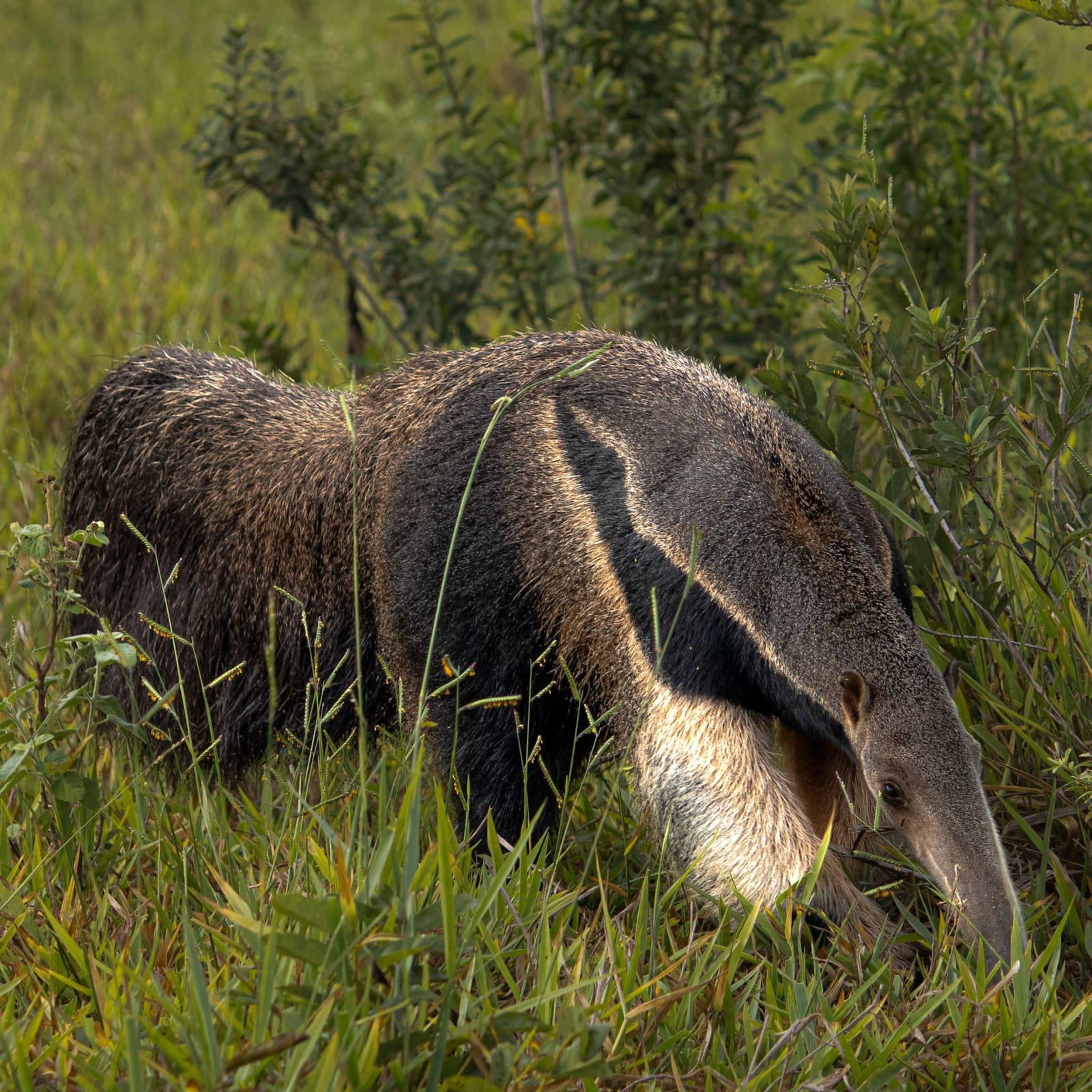
On the open Rupununi savannah, at first light. Karanambu runs early-morning searches across the savannah.
A good guide can get you close without disturbing them. Our Rupununi travel guide covers the ranches.
Where can you see the harpy eagle?
Harpies nest in tall forest trees, and local guides often know an active nest. Sightings have been reported from the Iwokrama canopy walkway, around Rewa and in forest near Rupununi lodges.
A nest is the best chance. Keep your distance and follow the guide’s rules, because disturbance can make the birds abandon it. Our birdwatching guide covers the harpy and other target birds.
Where can you see manatees and hoatzin near Georgetown?
Manatees live in the ponds of the Botanical Gardens and the nearby National Park in Georgetown. It is an easy afternoon; see our Georgetown guide.
Hoatzin are easy on a morning boat trip on the Mahaica River, east of the city. They are odd birds: big, crested and clumsy, and their chicks have claws on their wings.
What other animals might you see?
- Monkeys: Guyana has eight primate species, including red howler monkeys, black spider monkeys, golden-handed tamarins and white-faced sakis.
- Capybara: the world’s largest rodent, around creeks and ponds in the Rupununi.
- Tapir: a big, shy forest animal that is rarely seen; guides often point out its tracks near water.
- Green anaconda and tree boas: in wetlands and riverside trees.
- Goliath birdeater: a huge forest spider guides can find at night around Rewa.
- Golden rocket frog: a tiny gold frog found only in Kaieteur National Park; see our national parks guide.
Two corrections to common claims: pygmy marmosets and Amazon river dolphins (pink dolphins) are not found in Guyana. On the coast you may see the Guiana dolphin, a grey estuary dolphin.
What is a night walk or spotlighting trip?
Many Guyanese animals are active after dark. On a spotlight trip, a guide walks a trail, drives a track or drifts a boat while sweeping a torch for eyeshine, the glow of light reflected from animals’ eyes.
What you might see:
- On rivers: black and spectacled caiman, roosting boat-billed herons, tree boas, frogs
- In the forest: potoos, owls, opossums, pacas, tarantulas and stick insects
- On roads and airstrips: nightjars, foxes and, rarely, a jaguar or ocelot
Night trips run from Iwokrama River Lodge, Atta, Karanambu, Caiman House, Rewa and Surama.
Wear long sleeves and closed shoes, bring a headlamp with a red-light setting, and keep to the guide’s path. Point your own light down when not in use.
When is the best time to see wildlife in Guyana?
The drier months, roughly September to April, are best for savannah animals. As water shrinks into rivers and ponds, otters, caiman and anteaters become easier to find.
The wet season, about May to August, brings floods to the Rupununi. Boat trips get better and frogs are loud, but roads slow down and animals spread out.
How can travellers support wildlife conservation?
Much of the day-to-day protection of Guyana’s wildlife comes from Indigenous communities, rangers and researchers. Your choices as a visitor matter.
- Book community and research lodges. Rewa, Surama, Caiman House and Iwokrama all put money into villages and fieldwork.
- Use local guides. They find more animals and earn a living from keeping them alive.
- Keep your distance. If an animal stops moving or stares at you, you are too close.
- No baiting, touching or flash unless the guide or research team says so.
- Don’t buy wildlife. Never buy live birds, feathers, skins, turtle shell or caiman products. Taking wildlife out of Guyana without permits is illegal.
- Report what you see. Tell your guide about sightings; many lodges log them for research.
The red siskin shows what local protection can do. Wapichan, Makushi and Wai Wai communities in the South Rupununi patrol its range to stop trapping for the pet trade.
FAQ
What is Guyana’s national animal? The jaguar. The hoatzin, or Canje pheasant, is the national bird.
Is it safe to see wildlife in Guyana? Yes, with a guide. Caiman, snakes and big cats avoid people, and guides know how to keep a safe distance.
Can you see wildlife without leaving Georgetown? Some. Manatees in the city ponds, birds in the Botanical Gardens and hoatzin on the Mahaica River are all easy from town.
Are there dangerous animals in Guyana? A few, including venomous snakes and stingrays in rivers. Wear boots on trails, shuffle your feet when wading and follow your guide.
Next step: Our sister company, Guyana Tours & Transportation Services, runs Iwokrama canopy walkway trips. Starting in the forest? Read our Iwokrama Forest guide.