Last checked: November 2026
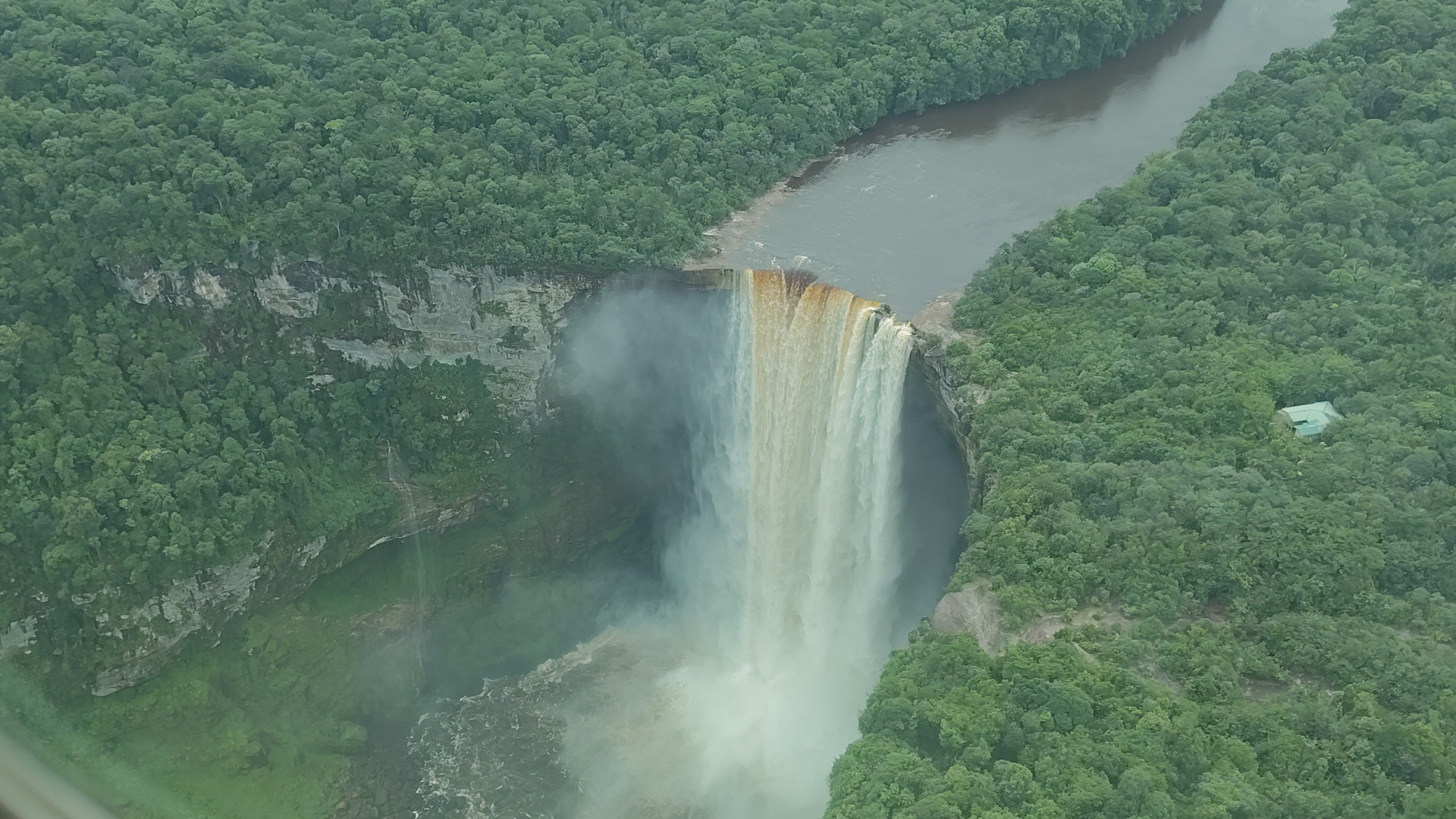
Most people see Kaieteur Falls on a day trip: about an hour’s flight from Georgetown, roughly two hours on the ground, then the flight back. A park guide walks you from the airstrip to three lookouts over the 226-metre (741-foot) single drop. If you have a week and decent fitness, you can also reach it overland by road, boat and a steep climb.
At a glance
- Where: Kaieteur National Park, on the Potaro River, Potaro-Siparuni region, in Guyana’s interior
- Getting there: light aircraft from Ogle (Eugene F. Correia International Airport), Georgetown; about 1 hour each way
- Time needed: a full day, with about 1.5 to 2 hours at the falls
- Cost: varies; ask for a current quote
- Best for: anyone with one spare day in Georgetown; walkers and birders who want more can stay overnight or go overland
What is Kaieteur National Park?
The park was set up in 1929, making it one of the oldest protected areas in South America. Some sources give 1930. It covers about 627 square kilometres (62,700 hectares) of rainforest and sandstone plateau on the Guiana Shield, rock more than two billion years old.
The Potaro River runs across the plateau and drops off its edge in one clean fall. At the top, the falls are roughly 90 to 105 metres (300 to 350 feet) wide. The Patamona people, an Indigenous nation of the area, live in and around the park.
How do you get to Kaieteur Falls?
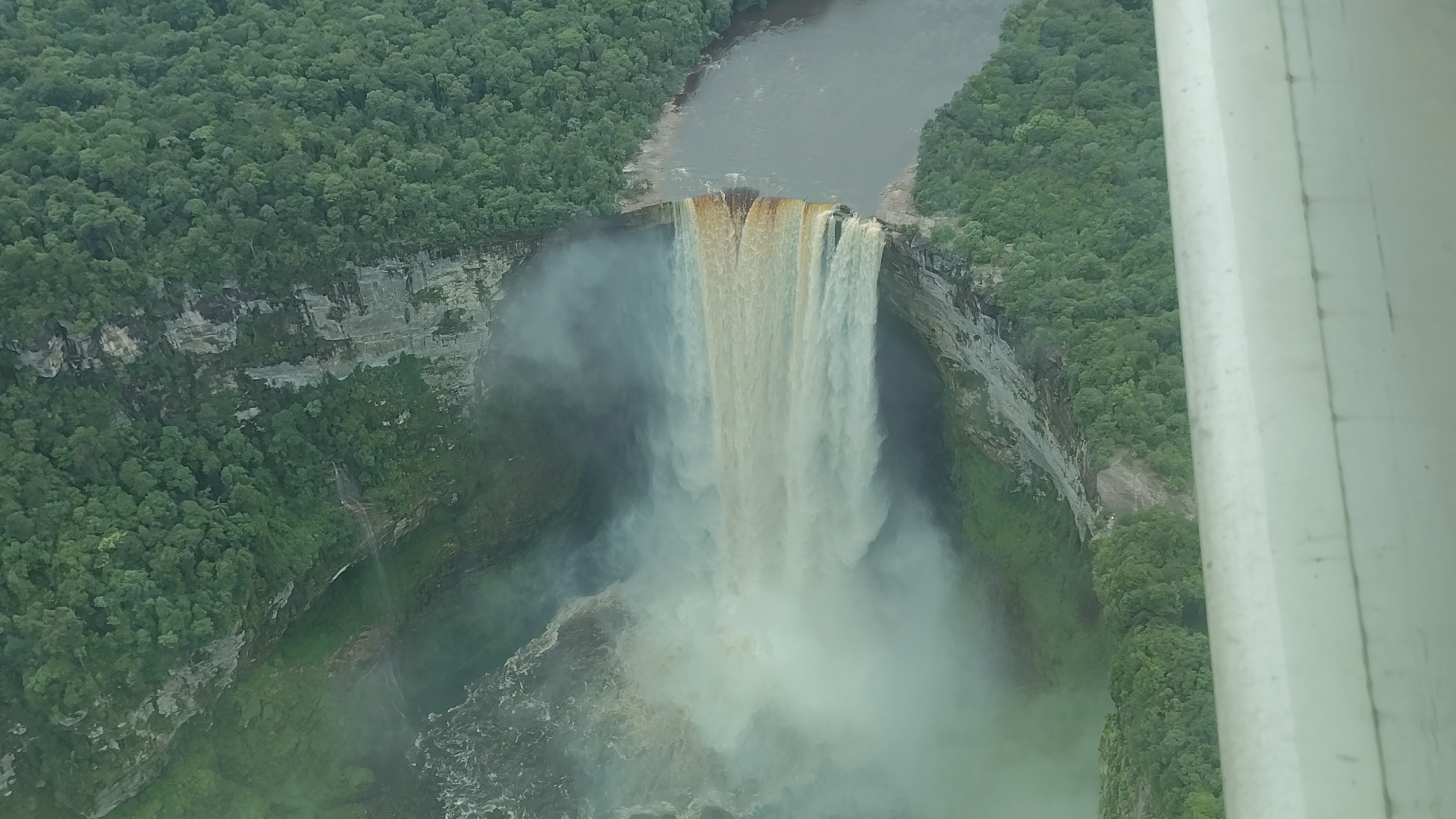
Nearly everyone flies. Small planes, often around 12 seats, leave from Ogle airport on Georgetown’s East Coast. Most tours include the flight, a trained guide and the park entry fee. Pilots usually circle the falls so both sides of the plane get a look.
Three things catch first-timers out:
- Minimum numbers. Flights need enough passengers to go. If a plane doesn’t fill, your trip can move to another day.
- Weather. Cloud over the plateau delays or cancels flights. Keep a spare day before any international flight home.
- Weight. Small aircraft limit how much you can carry. Ask your operator about bags before you pack.
You land on an airstrip a short walk from the visitor area, where there are washrooms and a guest house. Some trips include a light lunch there.
What is the trail like, and what are the lookouts?
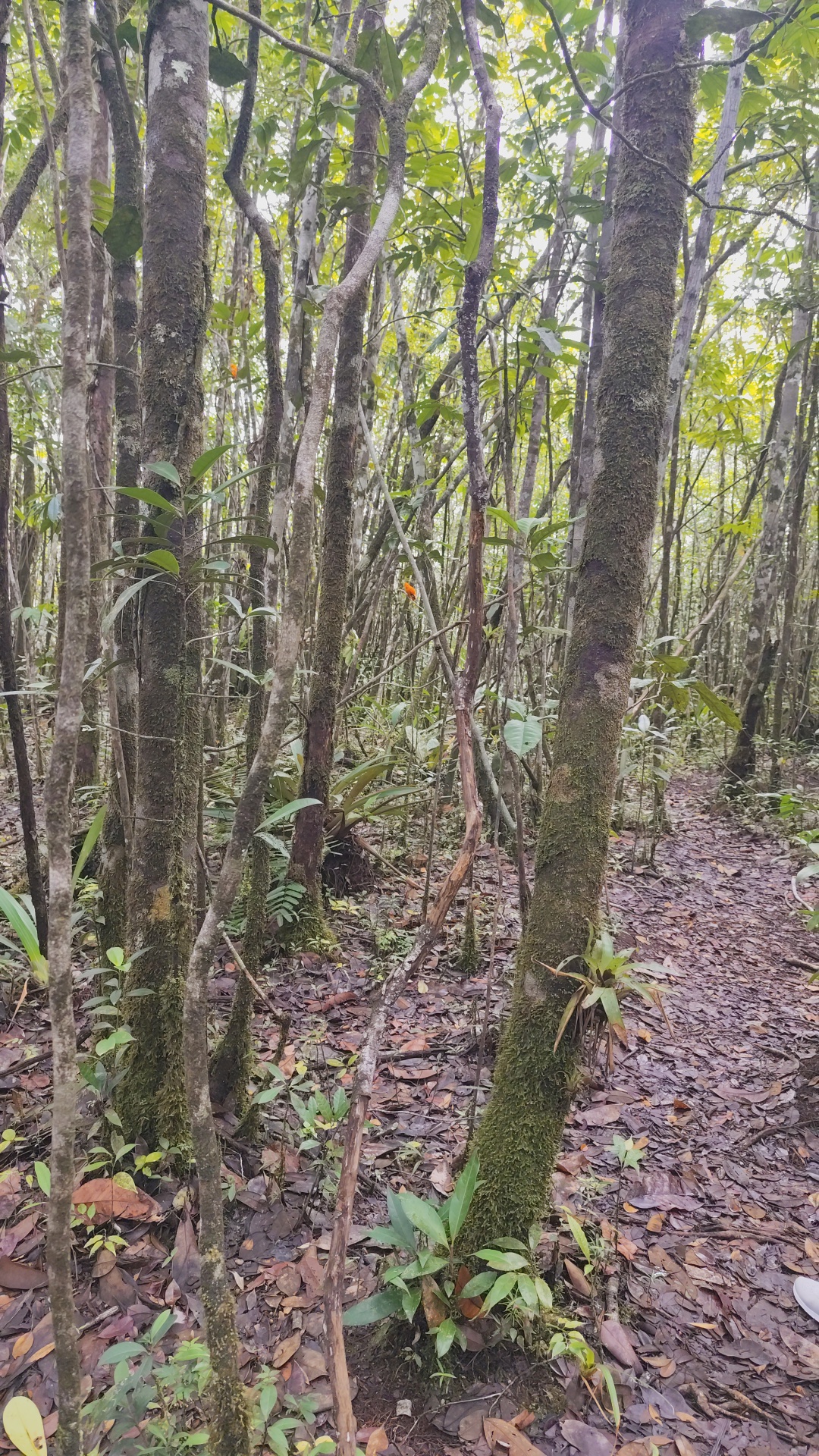
The walk is short but uneven. Expect roots, wet rock and some slopes, and allow about 20 minutes to reach the viewpoints. A park ranger or guide leads every group and stops along the way to point out plants and animals.
There are three main lookouts open to general visitors:
- Johnson’s View: a side-on view down the full height of the drop.
- Boy Scout View: the first frontal view of the falls from land. It is named after scout troops who once had to hike up from the bottom of the gorge.
- Rainbow View: where the spray often throws a rainbow when the sun is out.
Two further points, Break and Lookout, are closed to general visitors and need permission from the Protected Areas Commission.
What wildlife can you see at Kaieteur?
The headline animal is the golden frog (Anomaloglossus beebei), found nowhere else on Earth. It is tiny, under 2 cm, and lives its whole life inside the giant tank bromeliad Brocchinia micrantha, a spiky plant that holds water in its leaf bases. Guides know where to look. Don’t handle the frogs or the plants. The species is listed as Endangered.
Other things to watch for:
- Guianan cock-of-the-rock: a bright orange bird that nests near the falls. Sightings are possible but not guaranteed.
- Kaieteur swifts: they nest on a rock shelf behind the falling water and pour into the gorge at dusk. Day-trippers usually leave before then.
- Sundews: small carnivorous plants that grow on the open rock near the falls.
Overnight visitors and overland walkers get much better odds. Animals are most active early and late in the day, when the planes are gone.
What is the legend of Kaieteur?
The best-known story comes from the Patamona. A chief named Kai paddled his canoe over the falls as a sacrifice to Makonaima, the Great Spirit, so his people would be saved from the Caribishi, a rival group. The falls carry his name. “Kaieteur” is usually translated as “old man’s fall”.
The first European record came in 1870, when the British geologist Charles Barrington Brown reached the falls. Kaieteur was known to the Patamona long before that.
Can you get to Kaieteur Falls overland?
Yes, but it takes about five days one way and you fly back. A typical route looks like this:
- Drive about 8 hours from Georgetown to the mining town of Mahdia, then on to Pamela Landing.
- Boat about 2.5 hours up the Potaro River to Amatuk, then camp in hammocks.
- Walk and boat past Waratuk to Tukeit, at the foot of the gorge.
- Climb 4 to 6 hours, hot and steep with some scrambling, to the top of the falls.
- Stay at the Kaieteur guest house, then fly out to Georgetown.
Operators call it easy to moderate, but the final climb is hard work. You need reasonable fitness and a guide. Prices change often, so ask for a current quote before you book.
Can you stay overnight at Kaieteur?
There is a small, basic guest house near the airstrip. Book well ahead through a tour operator or the Protected Areas Commission, which manages the park. Staying lets you see the falls at sunrise and dusk, catch the swifts and look for wildlife without the day crowd. Bring food, a torch and anything you need. Facilities are simple.
When is the best time to visit Kaieteur?
The falls run all year. Flow is usually strongest in and just after the main rainy season, roughly May to August. In the drier months the falls are thinner but skies tend to be clearer.
Fog and rain can roll in at any time. A cloudy morning often clears by midday, which is one reason many flights leave late morning.
How do you stay safe at Kaieteur Falls?
There are no railings at the lookouts. The rock near the edge is often wet and slippery, and the drop is sheer. People have died here.
- Stay with your guide and stand where they tell you.
- Wear shoes with grip. Flip-flops are a bad idea.
- Don’t climb past markers for a photo, and don’t let children wander.
- Swimming isn’t allowed above the falls. The current pulls toward the edge.
- Take nothing from the park: no plants, rocks or animals.
Pack a light rain jacket, insect repellent, sun protection, water and a waterproof phone case. The plateau can feel cool when cloud comes over.
FAQ
How long do you get at Kaieteur on a day trip? Usually about 1.5 to 2 hours on the ground. That is enough for the three lookouts at an easy pace.
Is the Kaieteur walk hard? No. It is short and mostly flat, but uneven and slippery in places. Anyone who can manage roots and wet rock for 20 minutes at a time should be fine.
Can you see Kaieteur Falls from below? Only on the overland route, which ends with the climb from Tukeit at the base of the gorge. Day trips view the falls from the top.
Will I definitely see a golden frog? No. Guides check the bromeliads near the trail, which gives you a fair chance, but sightings are not guaranteed.
Next step: Our sister company, Guyana Tours & Transportation Services, runs Kaieteur Falls day trips. Short on time? Our 3 days in Guyana itinerary fits Kaieteur around Georgetown.